The white desert that began as an ancient sea
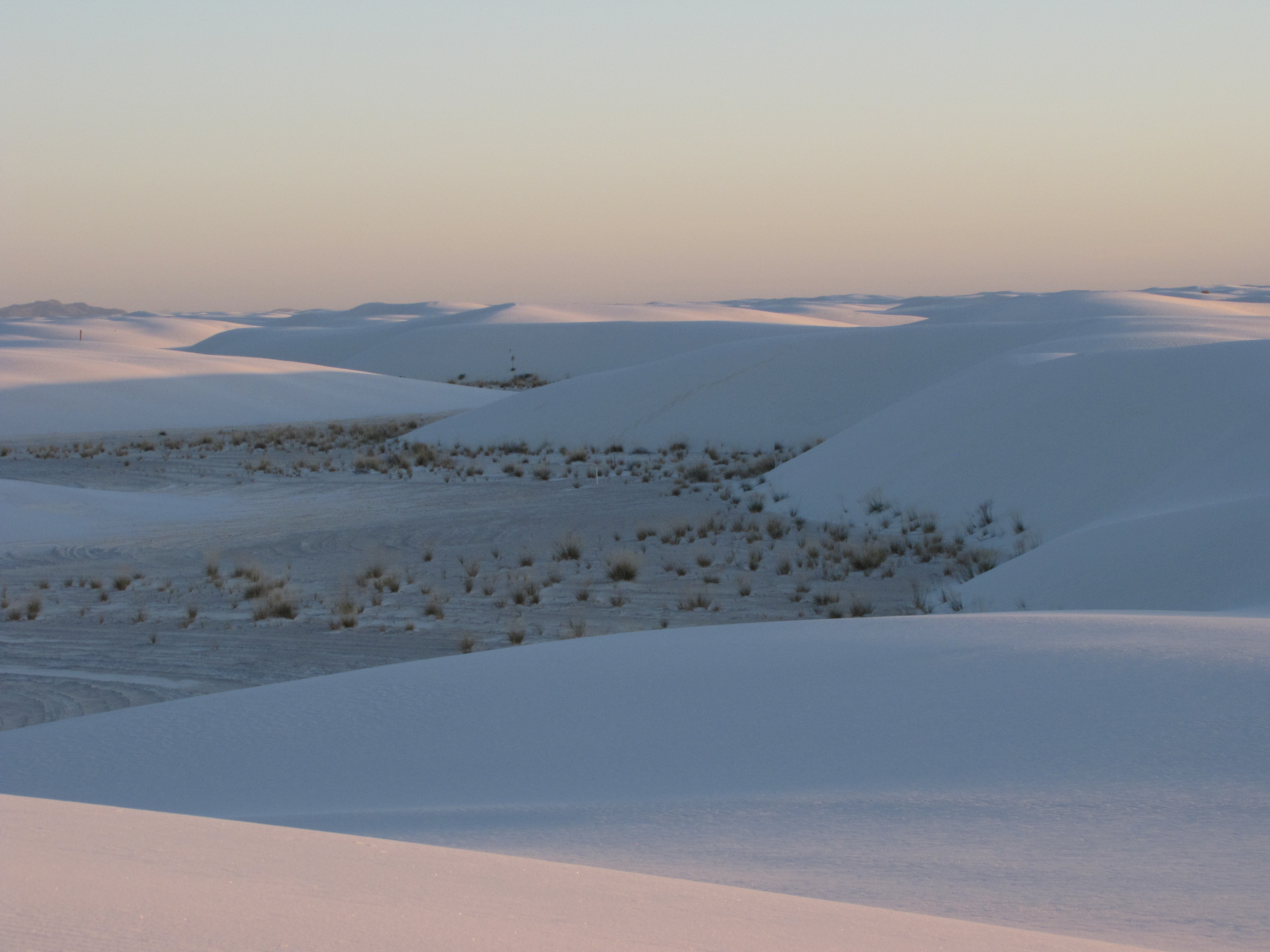
White Sands National Park can look like a field of snow under a desert sky.
The white grains have a history
White Sands National Park can look like a field of snow under a desert sky. Its sand has a very different origin. The National Park Service traces the gypsum to minerals deposited when an ancient sea covered this part of the Southwest. Later geological changes lifted, exposed and rearranged the landscape. The dunes are the visible end of a long chain, rather than a white version of an ordinary beach. The accompanying close-up makes that story unusually tangible: individual grains become a geological subject.
Follow the basin, not just the dune
The park's geology account describes the development of the Tularosa Basin between surrounding mountain ranges. Water, dissolved minerals, lake history and wind all belong in the explanation of how gypsum became sand. An enclosed basin is important because materials do not simply follow a river to the sea. Reading that history before a visit changes what you notice. The question becomes how a landscape keeps and moves its minerals, rather than merely where to stand for a dramatic photograph.
Change the scale of the visit
Try dividing your attention among three scales. First, look at the dune field as part of the basin. Second, notice the shape of one accessible dune and the way light reveals its surface. Third, look closely at the grains without removing material from the park. These are observation prompts, not measurements. A photograph can connect the scales if you record where it was made and what you were trying to show. Avoid giving an attractive image a scientific explanation that you have not checked.
Plan with the park, not a saved post
Use current National Park Service visitor information to choose an authorized route and check closures, conditions, hours and any required fees before departure. A social image cannot establish access or conditions for your travel day. Choose an outing that fits the group rather than assuming every visitor can follow the same route. Keep the official map available and respect the park's directions. This article offers destination inspiration; it does not announce an Unbound booking, guarantee access or imply a relationship with the park.
Bring home a better question
After the visit, put one wide photograph beside one detail and explain how the two are connected. Which part of the sea-to-sand story did the landscape help you understand, and which part still depends on the published geology? That distinction is the basis of thoughtful travel writing. It leaves room for wonder without pretending one afternoon is field research. White Sands offers more than an unusual background. It invites a visitor to see a grain of sand as evidence of a much larger history, then ask how that history continues to shape the place.
Read the original sources
National Park Service: Geology of White Sands ↗National Park Service: Plan your visit ↗Sources checked October 24, 2026. Time-sensitive details should be checked again before acting.
Plan your next trip with Unbound. Tell us your dates, interests and group size. Itinerary, price and availability are confirmed before booking.
Explore experiences →Request trip planning →