Maryland's ghost forest is a travel story written by salt water
On Maryland's Eastern Shore, a forest can disappear without being cut down.
Read the landscape
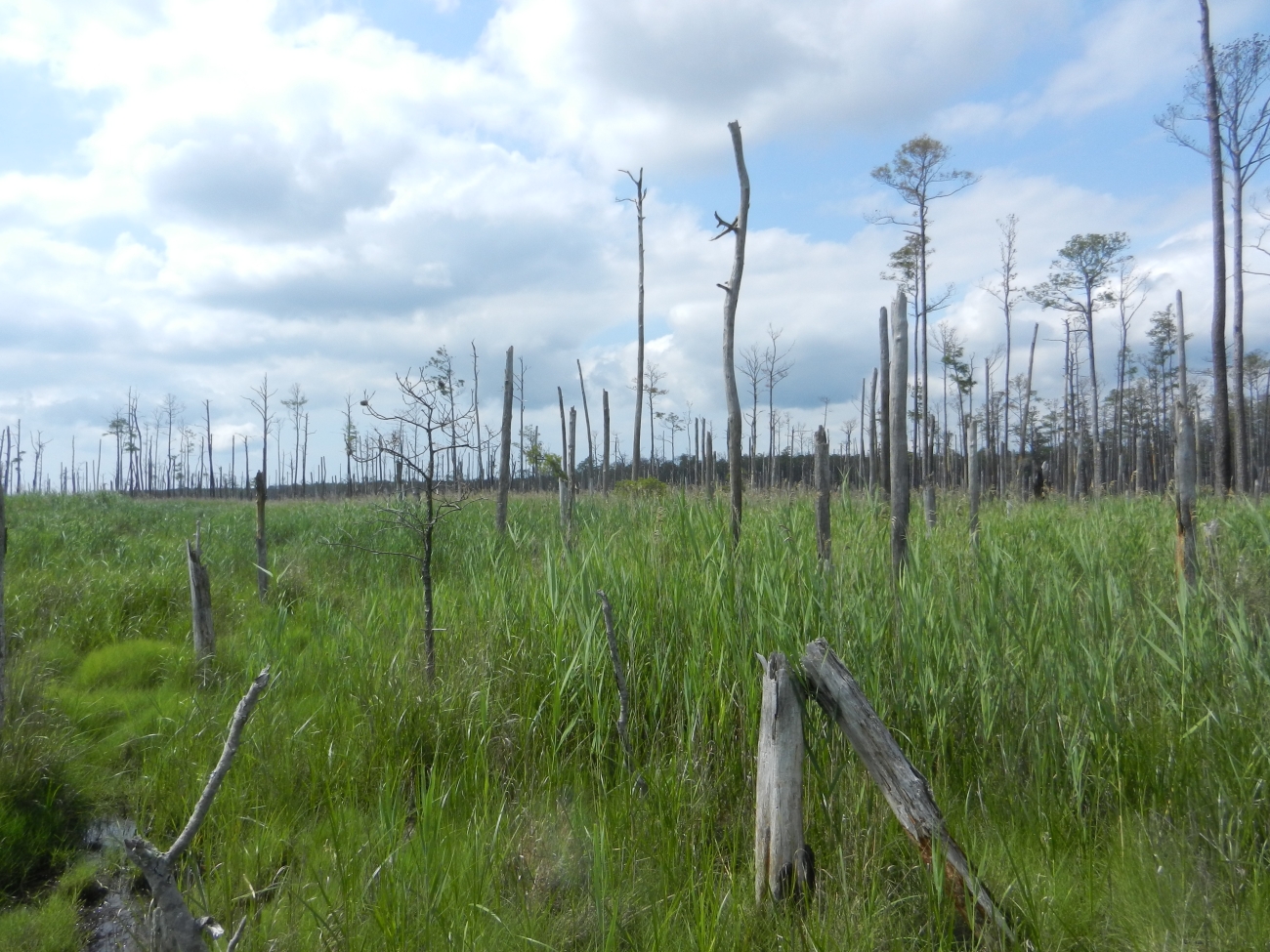
On Maryland's Eastern Shore, a forest can disappear without being cut down. Trees remain standing as pale trunks, while marsh grasses spread between them. From the road, it looks like a ghost forest. Ecologically, it is a landscape in transition.
Blackwater National Wildlife Refuge lies south of Cambridge, Maryland. The U.S. Fish and Wildlife Service describes a mosaic of tidal marsh, forest, managed freshwater wetlands and cropland. The refuge is a major stop for migrating waterfowl and a place to look for bald eagles. But one of its most revealing sights is quieter: dead trees marking places where changing water conditions have made forest survival difficult.
The Service identifies the ghost forests at Blackwater as a result of forest conversion to wetland as sea level rises. Saltwater intrusion and inundation can stress or kill trees that once occupied less saline ground. The visible trunks are evidence of change, but a visitor cannot determine the exact cause or timing for each tree just by looking at it. Local elevation, drainage and subsidence also matter.
Water changes the forest
For Unbound Travel Co., this is the kind of destination story worth following because the place teaches you to look more carefully. A dead trunk is not simply an ugly object in a scenic photograph. It can be a marker of ecological succession, habitat loss for some species and new conditions for others.
Blackwater is also practical to explore without pretending it is a wilderness expedition. The refuge lists a 3.6-mile Wildlife Drive, about five miles of hiking and 17 miles of paddling opportunities. The drive requires an entrance pass on ordinary days; other public areas outside the drive are free. Visitor Center hours, hunt closures and trail restrictions can change, so the official refuge visit page should be checked before leaving home.
An excellent day here would move slowly. Begin with the visitor information, then choose one approved viewing route. Look for the boundary between living forest, standing dead trunks and open marsh. Watch how the vegetation changes as ground elevation and water exposure change. Bring binoculars and a field notebook rather than a checklist of guaranteed wildlife sightings.
Visit with a question
Photography has an ethical dimension here. Use designated pull-offs, do not block roads, and avoid entering closed habitat. The point is to witness a place without adding pressure to it.
Blackwater offers a lesson bigger than a single park: landscapes are processes, not backdrops. A visit can reveal how water, land and life negotiate a new boundary over decades.
This is independent destination inspiration, not a scheduled Unbound trip.
Read an edge, not an isolated tree
Try making three sketches from a permitted viewpoint: the living canopy, the standing dead stems and the marsh surface. Mark only features you can actually see. On a later visit, use the same position and note differences without assuming every change has the same cause. A useful photograph includes enough surrounding ground to reveal the transition. A close-up of one dramatic trunk can be beautiful but says less about the landscape. This is a proposed way to pay attention, not a monitoring protocol or a claim that Unbound has surveyed the refuge. Bring questions back to the refuge staff and its published research.
Read the original sources
www.fws.gov — visit us ↗www.fws.gov — ghost trees blackwater national wildlife refuge ↗Sources checked October 24, 2026. Time-sensitive details should be checked again before acting.
Plan your next trip with Unbound. Tell us your dates, interests and group size. Itinerary, price and availability are confirmed before booking.
Explore experiences →Request trip planning →